

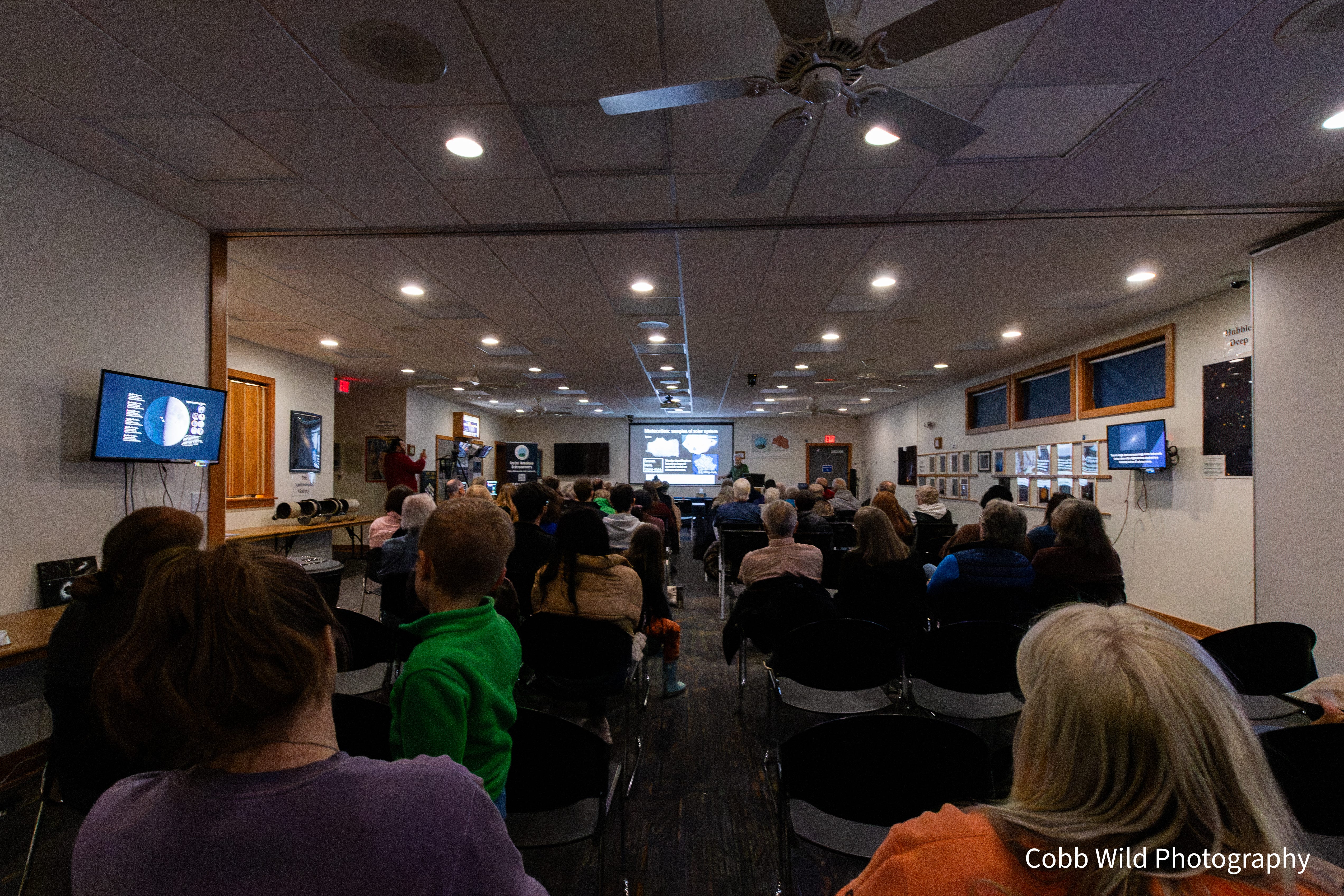
Geologist Dr David Peate from the University of Iowa spoke about his role as a geologist in the study of asteroids during the Cedar Amateur Astronomers (CAA) monthly public night at 7:30PM on Saturday. The Cedar Amateur Astronomer host their monthly public night at the Eastern Iowa observatory and Learning Center which is itself located at Palisade-Dows Nature Preserve. They maintain the Eastern Iowa Observatory and Learning Center which houses a 24 inch Boller and Chivens Cassegrain telescope, a 14.5 inch Cassegrain imaging telescope, a 16 inch Celestron Schmidt Cassegrain telescope, a six inch refracting telescope, two 40mm Coronado PST H-Alpha Solar telescopes, a 90mm H-Alpha Solar telescope, a 14 inch Celestron Edge HD telescope and imaging setup on an Astro-Physics mount along with several portable telescopes. The CAA and Linn County Conservation completed work on the Eastern Iowa Observatory and Learning Center (which is Iowa’s premier astronomy center) in 2008. The last in person public night will take place on November 7th at 7:30PM. Starting in December the public nights will take place online.
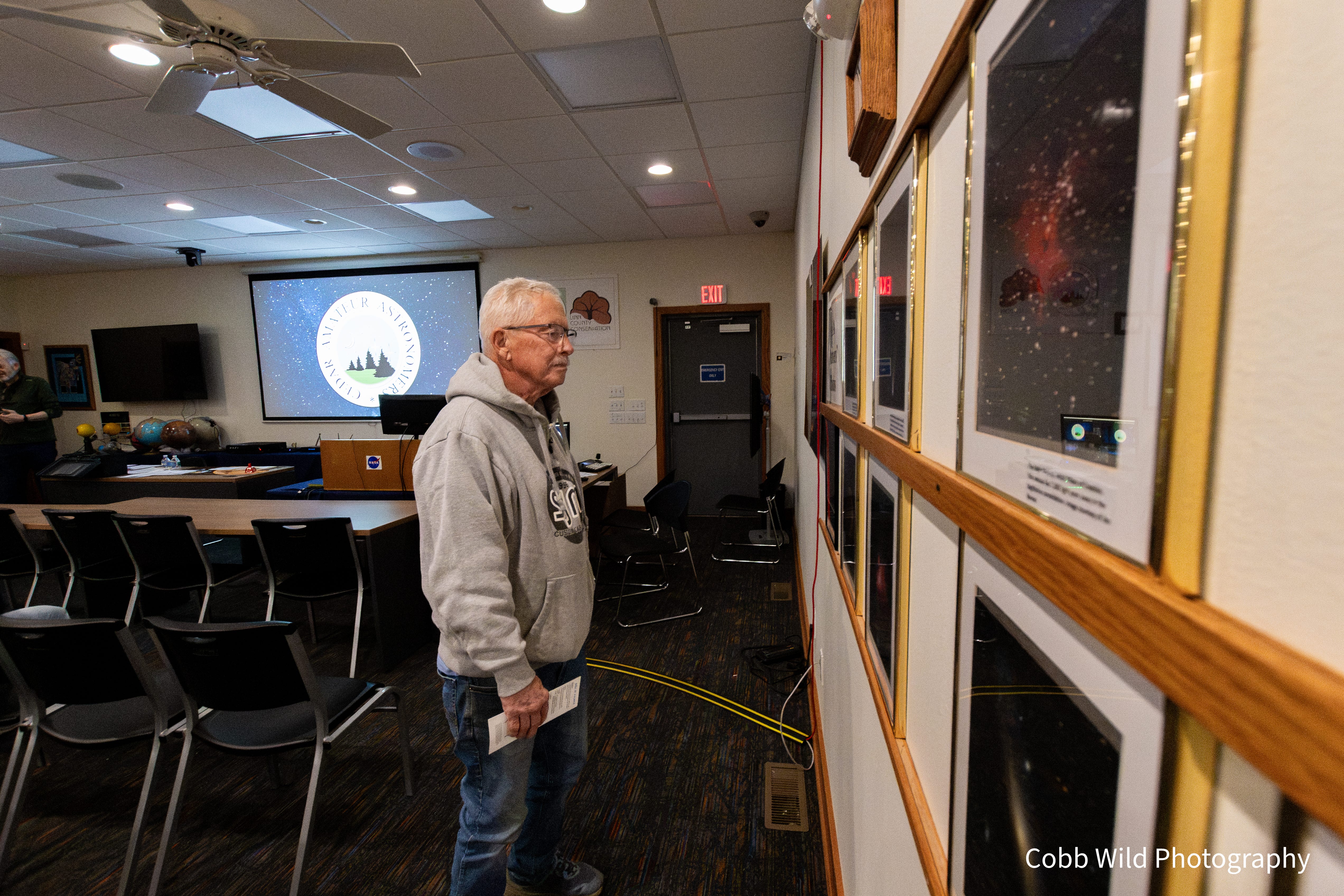
Danna Paulsen from Anamosa looks at some of the astrophotography on display at the Learning Center before the presentation. This was Paulsen’s first time attending the CAA’s public night.
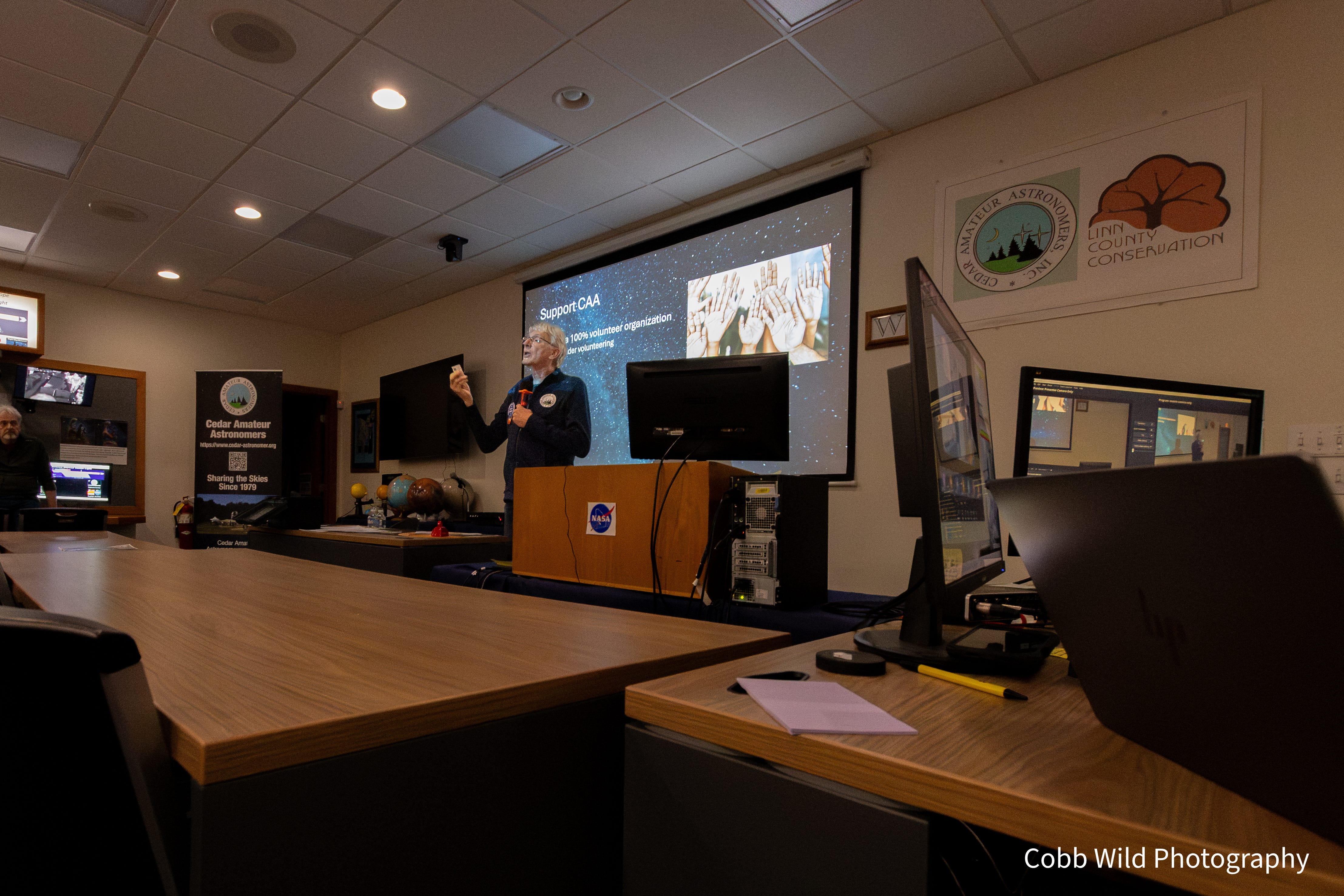
Gordon Baustian speaks to the crowd about the Cedar Amateur Astronomers organization before Dr David Peate’s presentation. Many of the CAA’s members have been employees of Rockwell Collins, Collins Aerospace, and faculty from the colleges of physics and astronomy at the University of Iowa.
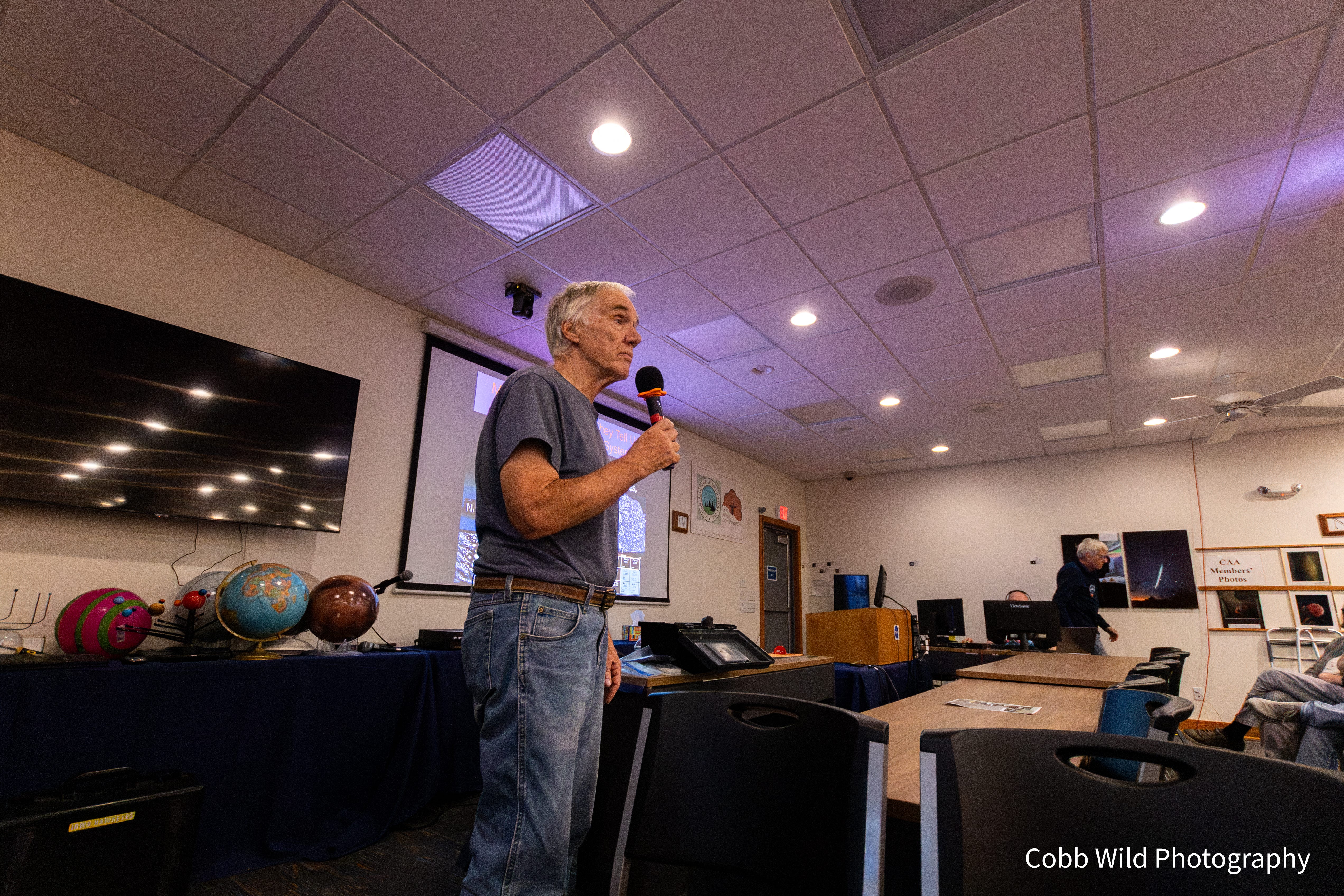
CAA member Steven Spangler introduces Dr David Peate during the Public night at The Eastern Iowa Observatory and Learning Center. Spangler spent 39 years working and teaching at the University of Iowa’s college of Physics and Astronomy, and is now retired.
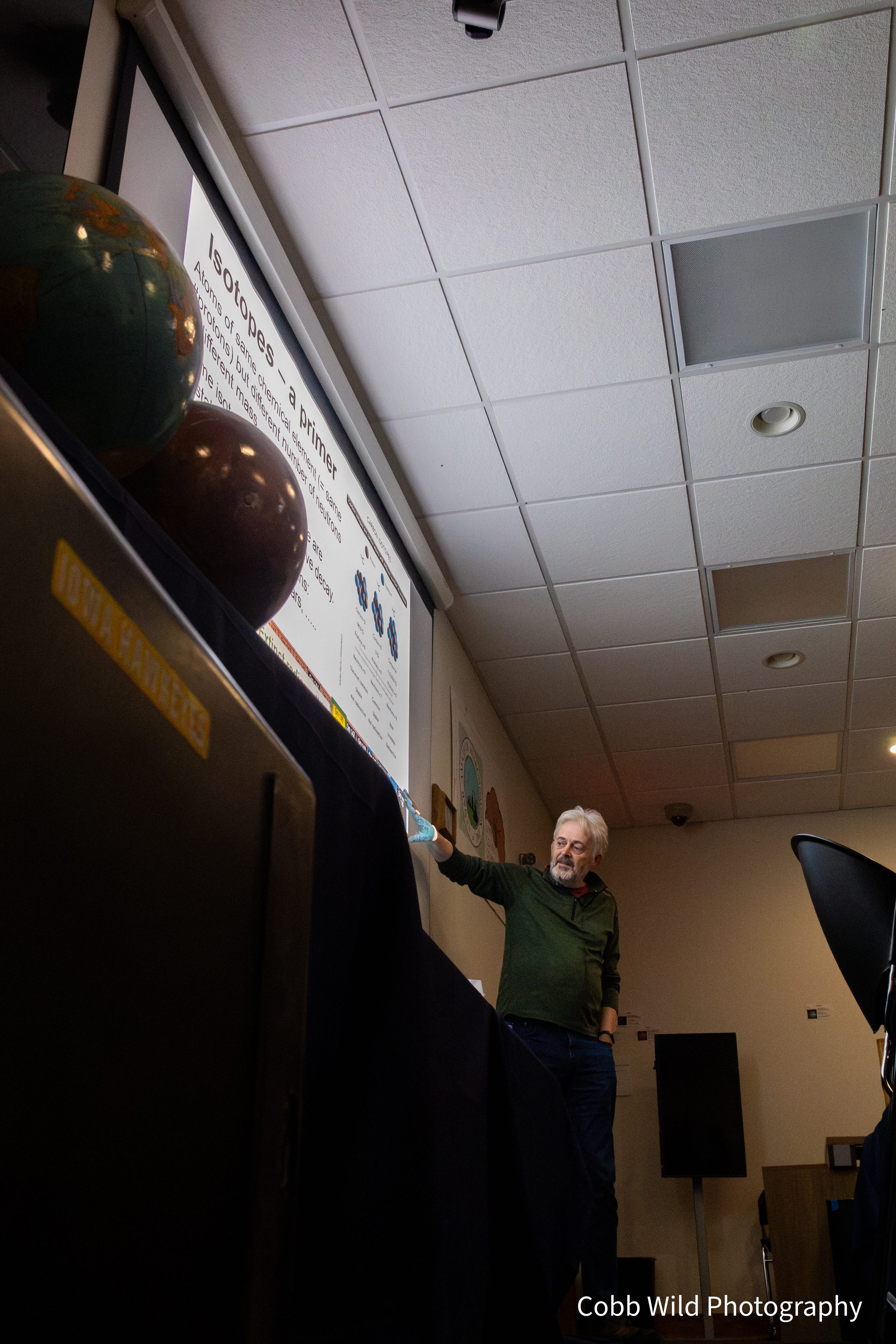
Geologist Dr David Peate from the University of Iowa tells the crowd about some of the Isotopes found at impact craters created by meteorites that have fallen to earth. Dr Peate has worked for the University of Iowa’s school of Earth, Environment, and Sustainability for the last 23 years. Although Dr Peate’s research primarily focuses on elemental and isotopic data on volcanic rocks and minerals he did work on a study on an impact crater in Chile. He also teaches a class about impact craters to first year students at the University.
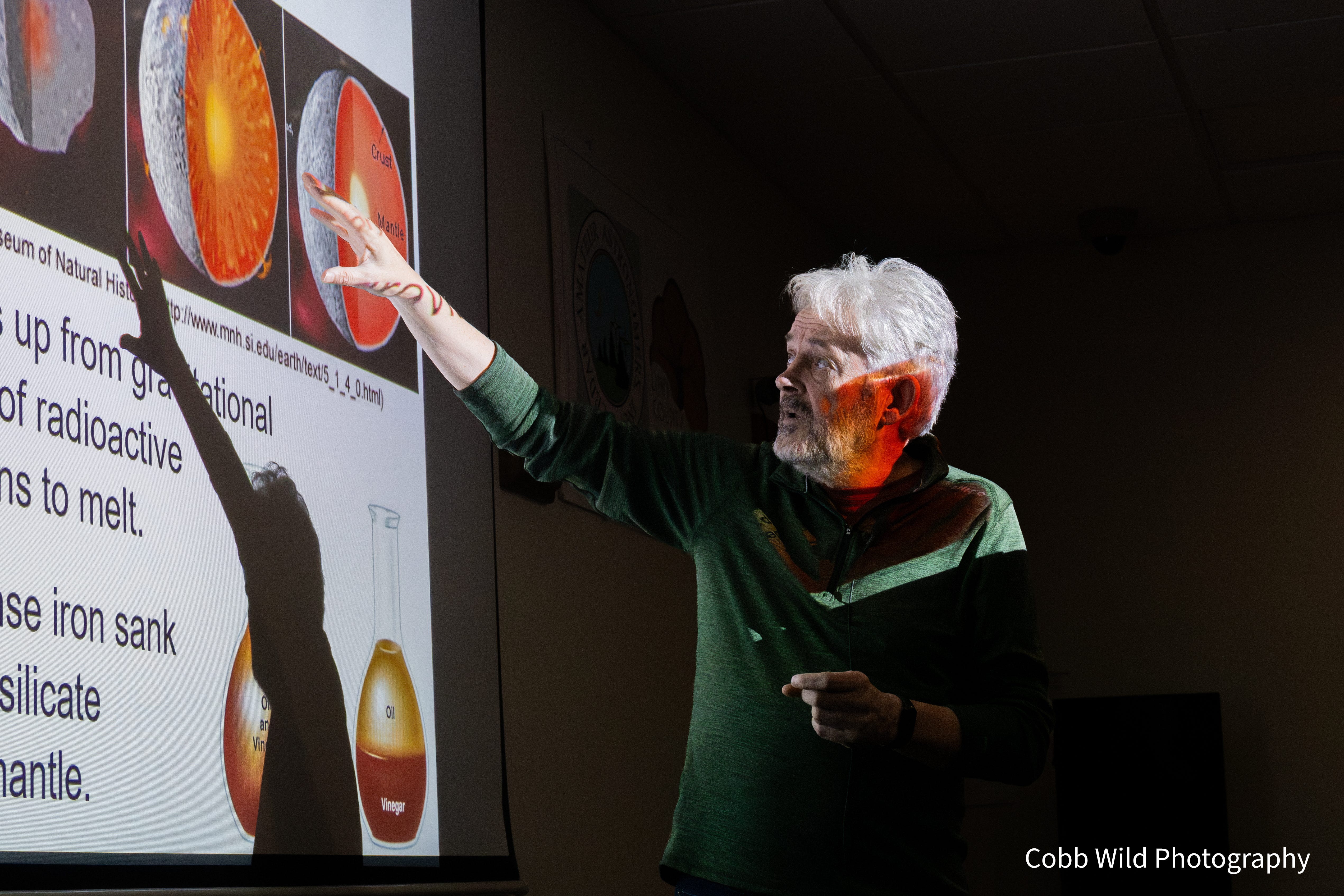
Dr Peate tells the audience about different meteorites, pre solar grains, and extinct radionuclides during his presentation at the Eastern Iowa Observatory and Learning Center on Saturday the 17th. Peate has been working as a Geologist since the 80’s, and took an interest in Geology while attending Cambridge University as an undergrad. He was a chemistry major when he started at Cambridge before realizing that in his words “I could do something related to rocks, that was more interesting”.
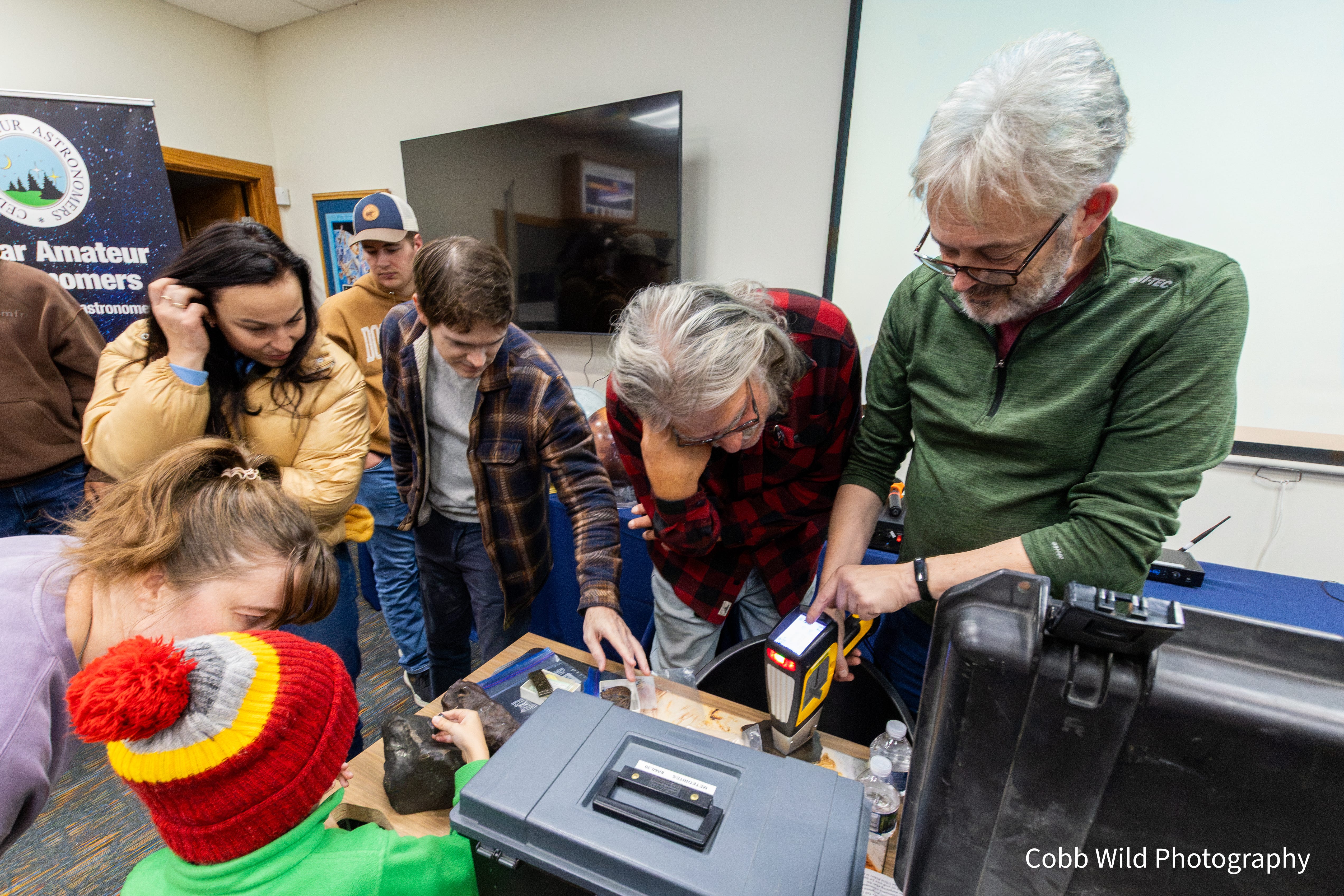
Dr Peate (right) shows some of the attendees fragments of meteorites. Dr Peate has won several awards including Distinguished Lecturer from the U.S. Science Support Program for his 2021 contribution to their Ocean Discovery Lecture Series, the University of Iowa’s College of Liberal Arts & Sciences Collegiate Teaching award in 2014, their College of Liberal Arts & Sciences Dean’s Scholar award in 2009, and the University’s Fall Scholar Obermann Center for Advanced Studies award in 2007.
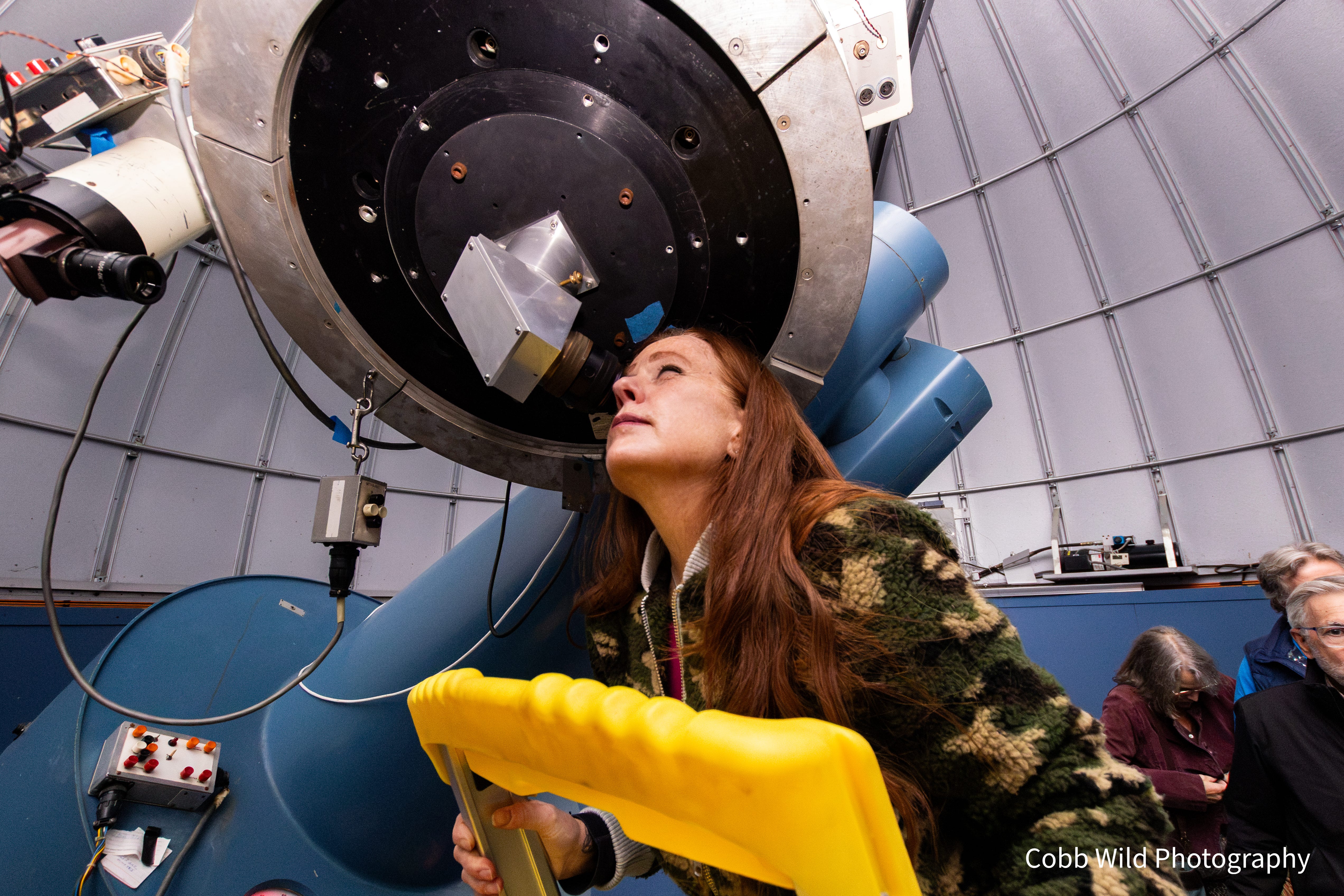
Angie Nassif looks through the 24 inch Boller and Chivens Cassegrain telescope after attending the presentation with her son George who has a degree in physics and is a member of the Cedar Amateur Astronomers. In collaboration with the U of I Department of Physics and Astronomy, the University of Iowa donated the 24 inch research grade Boller & Chivens telescope to the CAA in 2003. The telescope (which was built in 1965) served as the primary teaching and research telescope at the University of Iowa’s Hills Observatory before it was moved to the Eastern Iowa Observatory.
For inquiries about purchasing advertising space on this newsletter or any of the photos please email me at cobbwildphotography@gmail.com